





Ultimate OEM Kitchen Scissors: Precision and Versatility
OEM kitchen scissors are practical tools for home kitchens, food-prep businesses, promotional programs, and private-label houseware ranges. Unlike ordinary office scissors, kitchen scissors are designed for food preparation tasks such as cutting herbs, trimming meat, portioning vegetables, opening packaging, and handling small utility jobs around the kitchen. For B2B buyers, the main question is not only whether a pair looks good, but whether the design, materials, packaging, safety features, and supplier controls fit the target market.
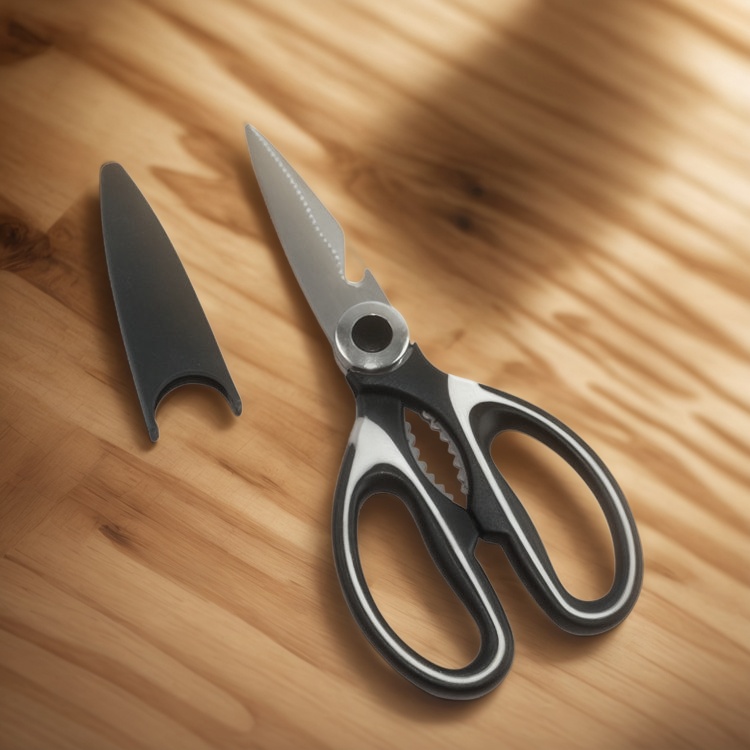
The original product description highlights stainless steel blades, a black and white ergonomic grip, a serrated edge on one blade, an integrated nutcracker and bottle opener, and a protective cover. These are useful features to discuss with a kitchen scissors factory, but buyers should still confirm exact specifications, test standards, packaging options, and production details before placing an OEM or wholesale order.
Key Takeaways
- OEM kitchen scissors should be evaluated by cutting performance, comfort, safety, cleaning convenience, and packaging suitability.
- A protective cover can support safer storage, retail presentation, and portable use for picnics, camping, or lunch-prep kits.
- Multi-function handles may add value, but buyers should test whether the nutcracker and bottle opener are strong enough for the intended use.
- Do not rely only on photos; ask the supplier for material details, samples, quality-control steps, and packaging dielines.
- For private-label projects, confirm branding method, color options, carton details, lead time, and compliance documentation needed for your market.
What Makes OEM Kitchen Scissors Different?
OEM kitchen scissors are made for a buyer's brand, channel, or product line. The buyer may request logo placement, handle color, packaging artwork, retail-ready sets, or feature adjustments, depending on what the factory can support. In the houseware market, these scissors are often positioned as everyday food-preparation tools rather than specialty chef equipment.
The most important difference is sourcing control. A retailer, importer, or distributor should understand how the scissors are built, how samples compare with bulk production, and whether the final product meets customer expectations. A good OEM process should make the product consistent, not just attractive in a product photo.
Blade Design and Cutting Performance
The source article states that the scissors use stainless steel blades and include a serrated edge on one blade. Stainless steel is commonly selected for kitchen tools because buyers expect resistance to ordinary kitchen moisture, but the exact grade and treatment should be confirmed with the supplier. Avoid assuming a specific steel grade unless the factory provides documentation.
A serrated edge can help grip slippery or tougher foods, such as poultry skin, herbs, or crusty bread. For B2B buyers, sample testing should include repeated cutting tasks that reflect real customer use. Test soft herbs, plastic food packaging, thin meat pieces, fish fins if relevant, and light cardboard packaging. The blades should cut cleanly without twisting, slipping, or forcing the user to apply excessive pressure.
Handle Comfort and Multi-Function Details
The original article mentions an ergonomic black and white grip, plus an integrated nutcracker and bottle opener in the handles. These features can improve perceived value, especially in retail and promotional channels, but they also add design responsibilities. A handle should fit a range of hand sizes, feel stable when wet, and avoid sharp pressure points during repeated use.
Multi-function additions should be checked carefully. A nutcracker area should have enough grip and strength for typical use, while a bottle opener should be positioned so the user can operate it safely. If the product is intended for families, outdoor use, or food-service prep, ask whether the supplier can provide usage guidance, warning text, and packaging instructions that match the product's functions.
Why a Protective Cover Matters
Scissors with cover are useful for storage, transportation, and retail presentation. A cover helps keep the blades enclosed in a drawer and can reduce accidental contact when the scissors are packed in a picnic basket, camping kit, or lunch-prep bag. It can also help protect the blade edge from rubbing against other tools.
When reviewing samples, check whether the cover fits securely without being difficult to remove. A loose cover may fall off during shipping or daily storage, while an overly tight cover can frustrate users. Buyers should also ask what material the cover uses, whether it can be branded, and how it is packed with the scissors in retail packaging.
Comparison Checklist for B2B Buyers
| Selection Point | What to Check | Supplier Questions |
|---|---|---|
| Blade material | Stainless steel is stated, but grade and finish need confirmation | What steel grade is used, and can documentation be provided? |
| Serrated edge | Grip on food, clean cutting, durability after repeated use | Is the serration standard, and can it be adjusted for OEM orders? |
| Handle design | Comfort, stability, grip feel, color consistency | What handle material, color options, and logo methods are available? |
| Cover fit | Secure storage, easy removal, safe packaging | Can the cover be customized or packed separately? |
| Multi-function parts | Nutcracker and bottle opener usability | What internal tests are used for these functions? |
| Packaging | Retail display, barcode area, instructions, shipping protection | Can the factory support branded packaging and carton specifications? |
Kitchen Scissors Factory Questions to Ask
Before choosing a kitchen scissors factory, prepare a structured request. Photos and short descriptions are not enough for OEM decisions. Ask for samples from the same production process intended for bulk orders. If the supplier offers multiple similar models, request a comparison sheet showing dimensions, materials, available colors, packaging formats, and customization options.
Useful questions include:
- What blade material and thickness are used for this model?
- Can the handle color, logo, cover, or packaging be customized?
- What quality checks are performed during kitchen shears manufacturing?
- What is the sample process before mass production?
- What information is needed to quote OEM packaging?
- Which compliance documents or test reports can be supplied for the buyer's target market?
If any information is not available, treat it as a point for follow-up rather than a confirmed feature. Responsible sourcing means verifying claims before listing them on retail pages or packaging.
Practical Applications and End-User Fit
Kitchen scissors can serve many everyday tasks: snipping herbs, opening food packs, trimming meat, cutting vegetables into smaller pieces, and assisting with outdoor meal preparation. The protective sheath makes the product more suitable for portable use, such as picnics or camping, as noted in the original article. However, product positioning should match the actual construction and confirmed test results.
For retail buyers, a broad-use kitchen scissor may fit a basic kitchen tools range, a giftable cooking set, or a camping-prep assortment. For food-service or professional channels, buyers may need stricter performance expectations, stronger cleaning guidance, or additional documentation. Always define the expected user before finalizing the specification.
Quality Control and Sample Review
A careful sample review should cover appearance, cutting feel, blade alignment, handle strength, cover fit, surface finish, and packaging protection. Check multiple samples rather than relying on one perfect unit. Open and close the scissors repeatedly to feel whether the pivot remains smooth. Inspect edges for burrs, gaps, or rough finishing.
For OEM orders, ask how the supplier controls consistency between approved samples and bulk production. Buyers may also request pre-shipment inspection, carton drop-test information, or product-use instructions, depending on channel requirements. The goal is to reduce surprises after the goods arrive, especially when selling through retailers or online marketplaces where returns and reviews affect future orders.
FAQ
Are OEM kitchen scissors suitable for private-label programs?
Yes, they can be suitable if the supplier supports the required logo, color, packaging, and documentation. Buyers should confirm customization options before assuming private-label availability.
What features should I prioritize first?
Prioritize cutting performance, blade alignment, handle comfort, safe storage, and packaging quality. Extra functions such as a nutcracker or bottle opener are useful only if they perform reliably.
Does a protective cover add value?
A cover can add value for drawer storage, portable use, and retail presentation. Check that it fits securely and does not loosen during normal handling.
What should I ask a kitchen scissors factory before ordering?
Ask about blade material, handle material, customization options, sample approval, quality-control procedures, packaging choices, lead time, and documents needed for your sales market.
Can I claim the scissors are rust-proof or food-grade?
Do not make those claims unless the supplier provides reliable documentation that supports them. Use cautious wording and verify all compliance claims before printing packaging or product listings.
