




Understanding Japanese Handle Shapes: D-Shape vs. Octagonal
Japanese kitchen knives are often recognized not only for their blades, but also for their distinctive handles. Many traditional Japanese knives use a wa handle: a lightweight handle style commonly associated with hidden-tang construction and a balance point that can feel closer to the blade than many Western-style full-tang knives. For cooks who use a pinch grip, this can make the knife feel controlled, nimble, and responsive.
Among wa handles, two shapes are especially common: the D-shape handle and the octagonal handle. Both can be comfortable and precise, but they suit different hands, habits, and kitchen routines. If you are choosing a kitchen knife for daily prep, professional use, or as a gift, understanding these handle shapes will help you make a better decision than relying on appearance alone.
What Is a Wa Handle?
A wa handle is a Japanese-style knife handle that is usually lighter in feel than many Western handles. Instead of the handle dominating the weight of the knife, the knife can feel more blade-forward or neutral, depending on the blade and handle combination. This makes wa-handled knives popular for cooks who value fine control during slicing, push cuts, pull cuts, and detailed prep.
Wa handles can be round, oval, D-shaped, octagonal, or other variations. The shape matters because it tells your hand where the blade edge is without needing to look down. A good handle should support control without forcing tension into the wrist or fingers.
D-Shape Handles: Locked-In Directional Control
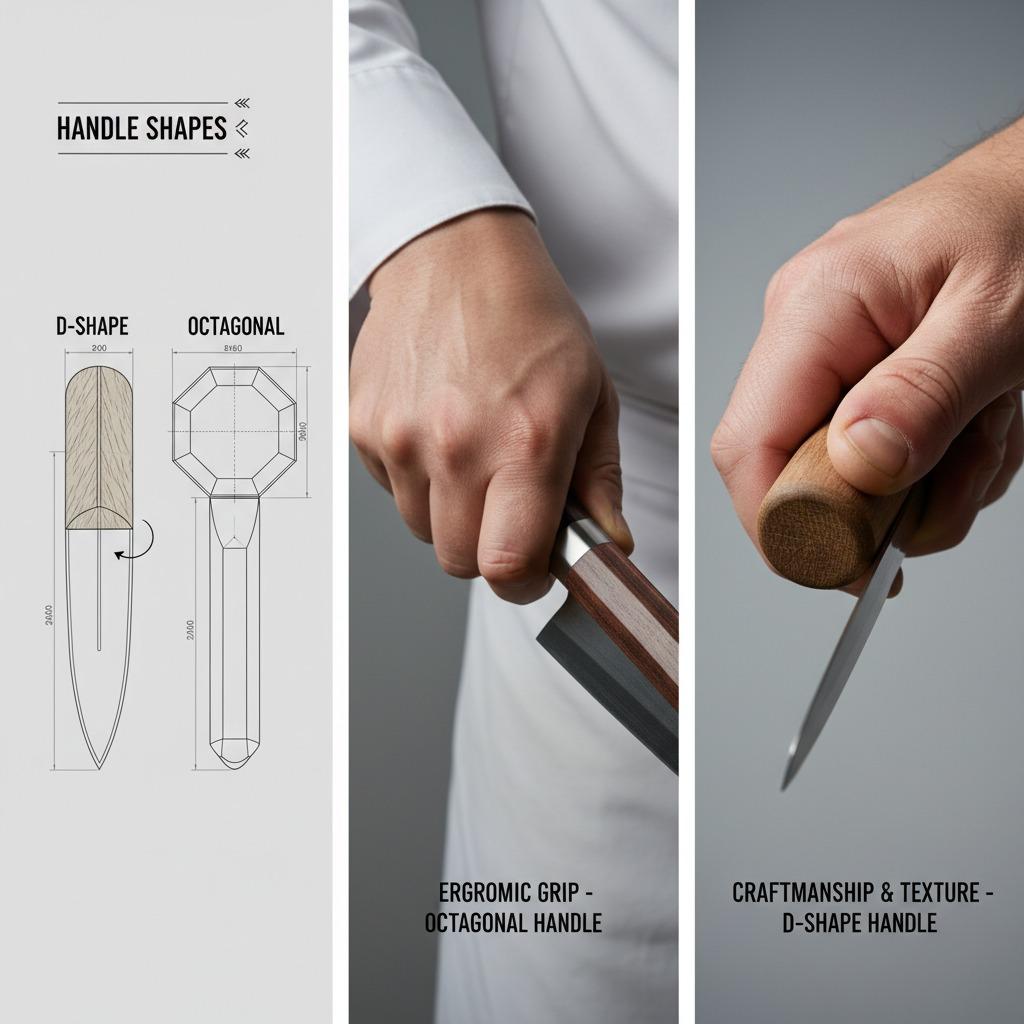
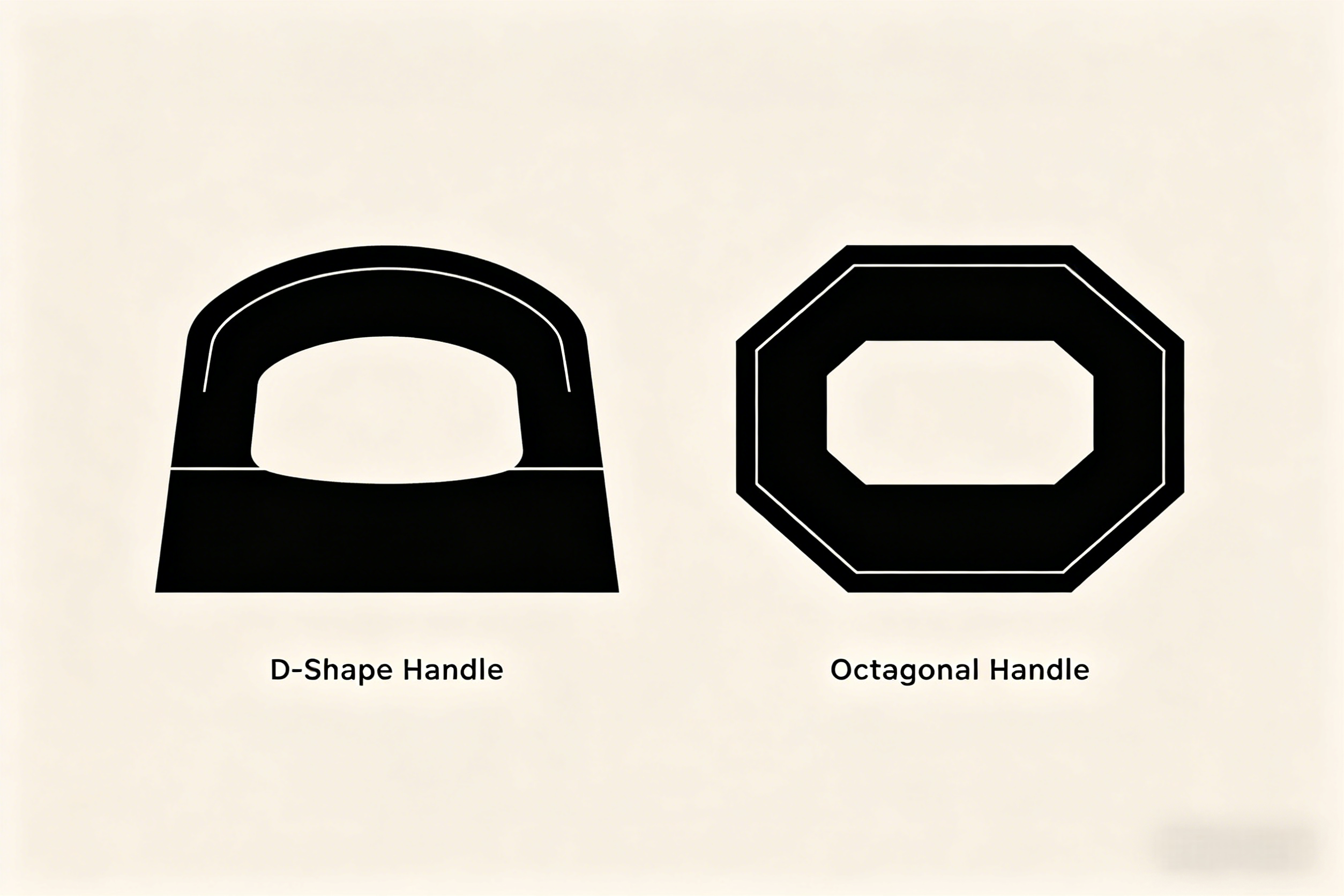
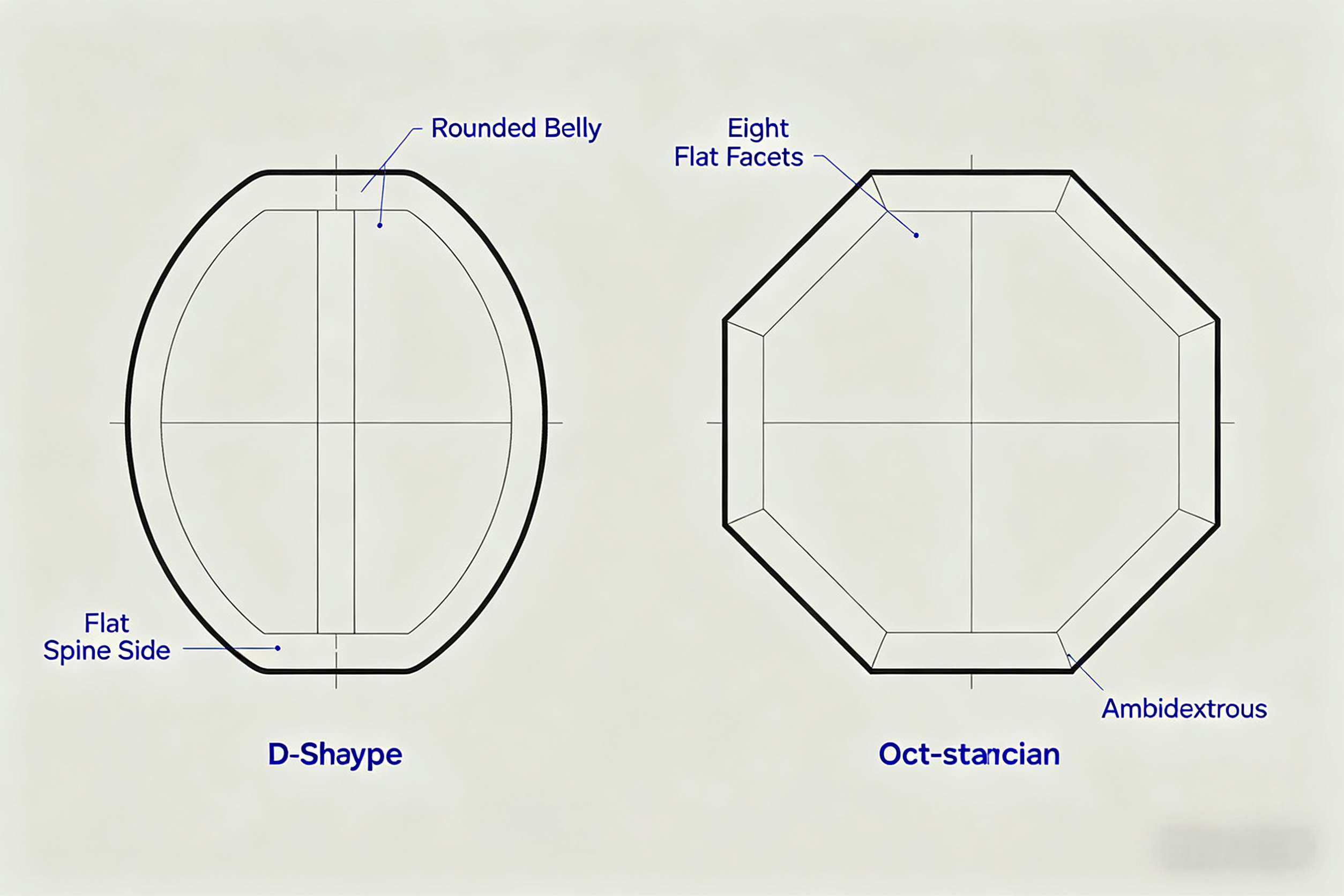
The D-shape handle, sometimes described as a chestnut-like shape, has one flatter side and one more rounded side. This creates a handle that nestles into the palm and encourages a consistent blade position. The original article notes that D-shape handles are handed-specific, commonly made for right-handed users, with left-handed users needing a mirrored version for best comfort.
The main advantage of a D-shape handle is the secure, oriented feel. When the handle matches your dominant hand, the knife can feel stable during repeated cuts. This is helpful for prep tasks where you want the blade to travel in a consistent vertical line, such as chopping vegetables, push-cutting herbs, or making controlled slices.
- Best for: cooks who like a handle that feels positioned and secure in the hand.
- Consider carefully if: the knife will be shared by left- and right-handed users.
- Common benefit: reduced need to readjust the handle during repetitive work.
Octagonal Handles: Symmetry and Versatility
An octagonal handle has eight facets around the handle. These flat surfaces create tactile feedback, so your fingers can sense the blade orientation. Unlike the D-shape, the octagonal shape is symmetrical and therefore generally ambidextrous. That makes it a practical choice for shared kitchens, restaurants, culinary schools, and home cooks who want one knife to work comfortably for different users.
Octagonal handles also allow subtle grip changes. If you shift between a pinch grip, a more relaxed handle grip, or delicate slicing control, the facets give traction without locking the hand into one position. Some cooks find the edges noticeable at first, but many appreciate the extra feedback once they become used to the shape.
D-Shape vs. Octagonal: Side-by-Side Comparison
| Selection Point | D-Shape Handle | Octagonal Handle |
|---|---|---|
| Handedness | Usually handed; often right-hand oriented unless mirrored | Symmetrical and generally ambidextrous |
| Grip feel | Locked-in and palm-guided | Faceted, tactile, and adjustable |
| Best use case | Repetitive prep and directional cutting | Shared use, varied grips, and general versatility |
| Learning curve | Very natural if it fits your hand; awkward if it does not | Easy for most users, though facets may feel firm at first |
| Sharing the knife | Less ideal unless all users match the handle orientation | More practical for multiple users |
| Grip adjustments | Encourages one stable position | Allows small rotation and hand-position changes |
How to Choose the Right Handle for Your Kitchen Knife
Start with how the knife will be used. For a personal knife used by one cook, a D-shape handle can be excellent if it matches the user’s dominant hand and grip style. If you cook for long sessions and prefer a handle that settles into the palm, the D-shape is worth considering.
For a shared knife, an octagonal handle is often the safer choice. Its ambidextrous shape suits more users, and its facets help maintain control even when hands move between tasks. This is especially useful if the knife will be used by family members, multiple cooks, or staff in a prep environment.
- Check handedness first. If choosing D-shape, confirm whether it is right- or left-hand oriented.
- Think about grip style. Pinch-grip users often appreciate the balance and feedback of wa handles.
- Consider sharing. Octagonal handles are usually more flexible for multiple users.
- Match the task. Repetitive board work may favor D-shape; mixed prep may favor octagonal.
- Handle the knife if possible. Comfort is personal, and small differences can matter over time.
Care Tips for Wooden Wa Handles
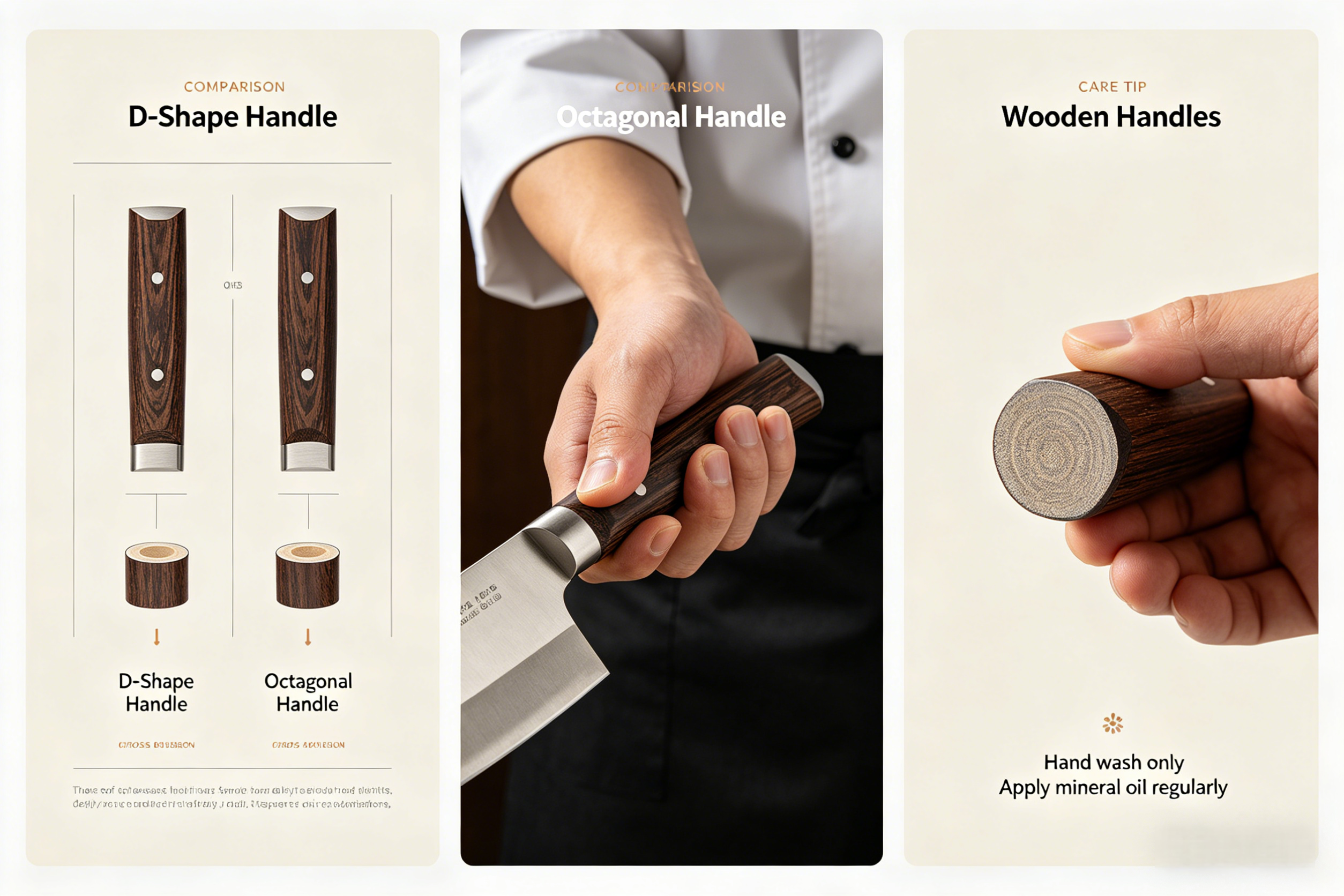
Wooden knife handles need simple, consistent care. The original article recommends applying mineral oil or beeswax regularly, avoiding soaking in water, and noting that handles are often replaceable because of hidden-tang construction. Those are useful habits for extending handle life and maintaining a comfortable feel.
- Do not leave the knife soaking in a sink or wet container.
- Wipe the handle dry after washing the blade.
- Use food-safe mineral oil or beeswax when the wood looks dry.
- Avoid dishwashers, harsh detergents, and long exposure to heat.
- If the handle loosens or cracks, ask a qualified knife service provider about replacement options.
Key Takeaways
- D-shape handles provide a secure, directional grip but are usually handed.
- Octagonal handles are symmetrical, versatile, and practical for shared knives.
- The right choice depends on hand dominance, grip style, and whether the knife is personal or shared.
- Wooden wa handles should be kept dry, lightly conditioned, and never soaked.
Practical FAQ
Is a D-shape handle better than an octagonal handle?
Not universally. A D-shape handle can feel more secure for the correct hand, while an octagonal handle is more versatile and ambidextrous. The better choice depends on who will use the knife and how they grip it.
Can a left-handed cook use a D-shape handle?
Only comfortably if the handle is made or fitted for left-handed use. A right-hand D-shape may feel awkward because the rounded and flat areas will not align naturally with the left hand.
Are octagonal handles uncomfortable because of the edges?
Some users notice the facets at first, but many find them helpful for grip feedback. If you have sensitive hands, try holding the knife before buying when possible.
Which handle is better for a shared kitchen?
An octagonal handle is usually the more practical option because it is symmetrical and suitable for both right- and left-handed users.
How often should I oil a wooden knife handle?
Oil it when the wood looks dry or feels rough. Frequency depends on use, washing habits, and climate. Use food-safe mineral oil or beeswax, and wipe away any excess.
