




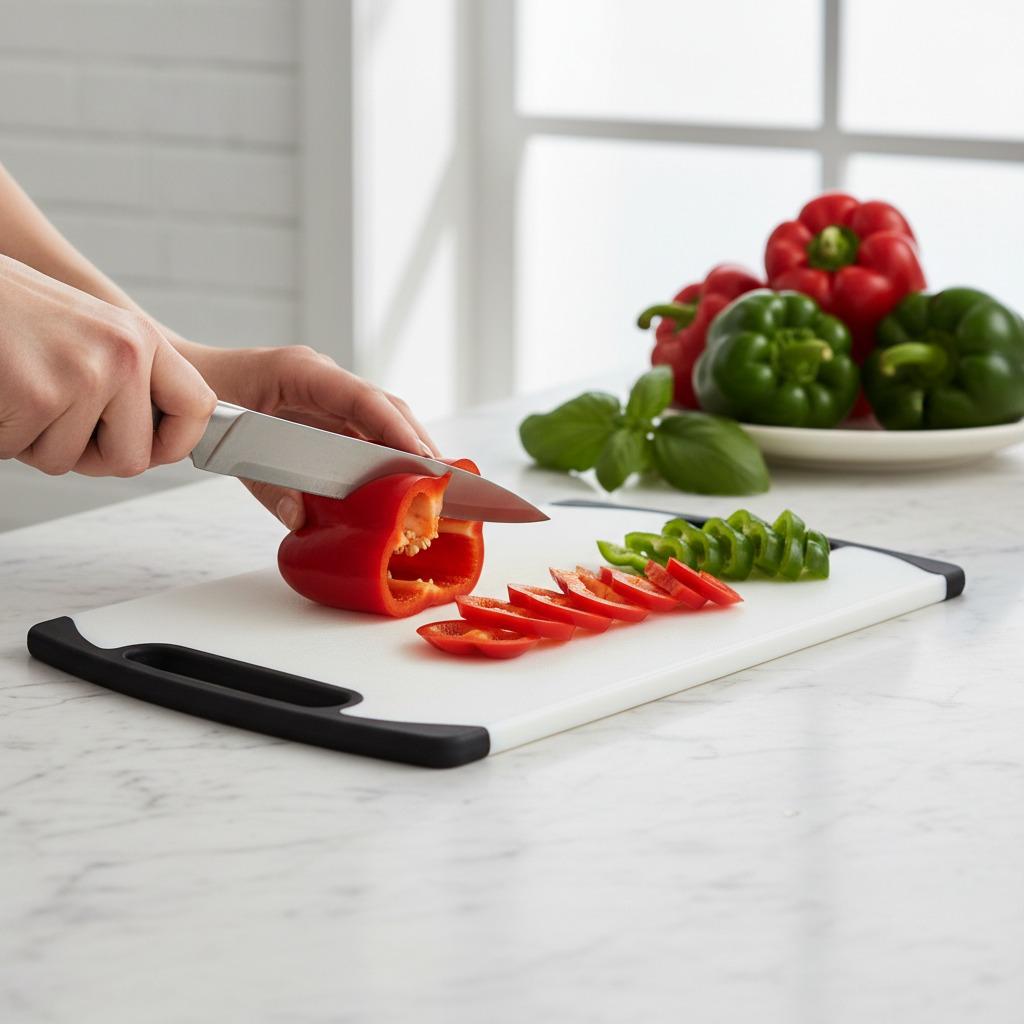
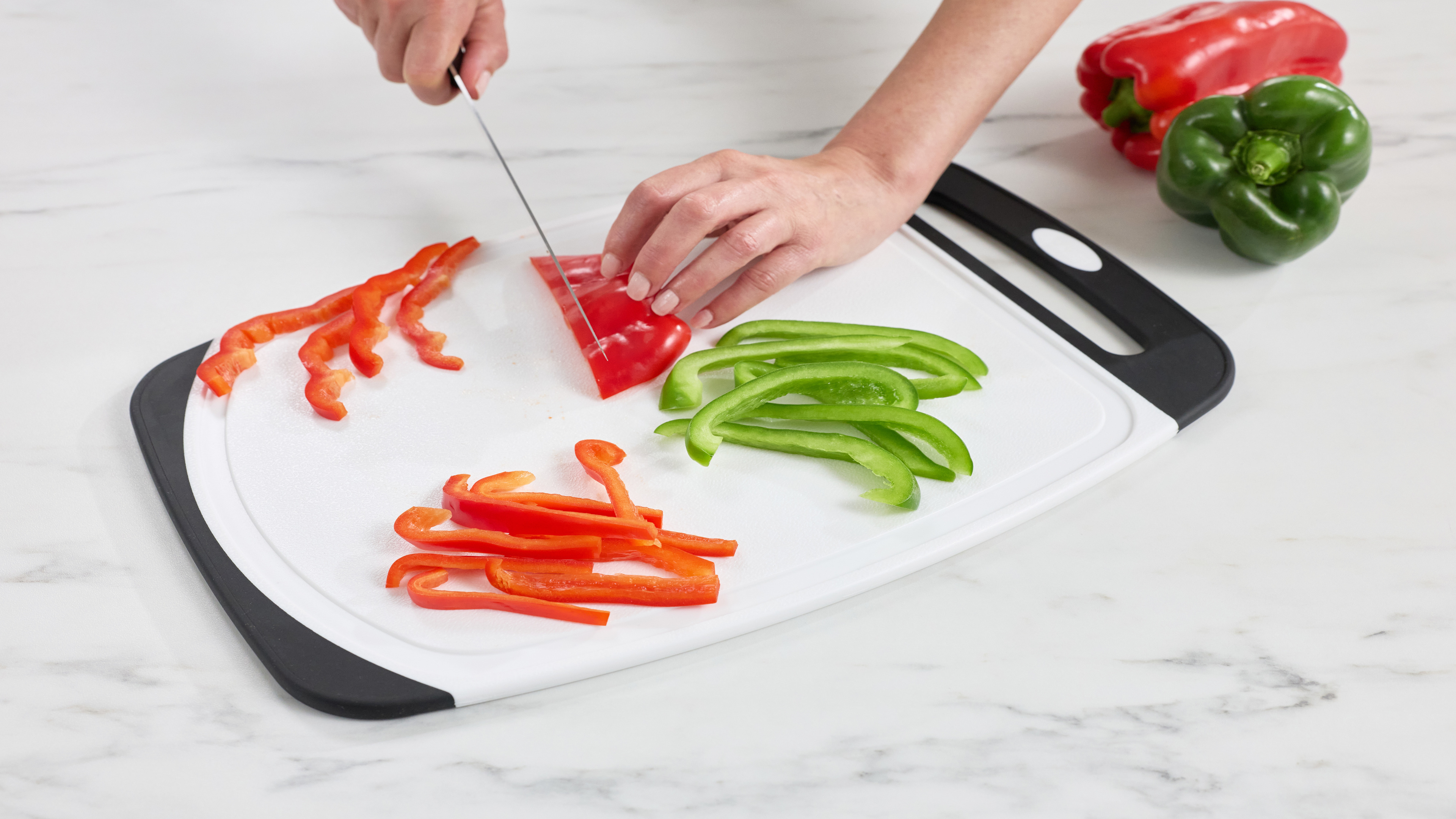
What to Look for When Buying a Non-Slip Plastic Cutting Board
A plastic cutting board is one of the most frequently used tools in a kitchen, but the right board is not only about having a surface to chop on. A good non-slip plastic board should stay steady, be easy to clean, suit the foods you prepare most often, and help reduce the risk of cross-contamination.
For home cooks, the buying decision usually comes down to practical details: grip, size, thickness, storage, cleaning, and when to replace the board. This guide explains what to check before buying so you can choose a board that fits your countertop, knife habits, and daily cooking routine.
Key Takeaways
- Choose a board that resists sliding on both dry and slightly wet countertops.
- Match the board size to your typical prep work, not just your storage space.
- Use separate boards or clear color coding for raw meat, seafood, produce, and ready-to-eat foods.
- Replace plastic boards when deep knife grooves, warping, or persistent odors appear.
- Ask sellers clear questions about material, cleaning instructions, and heat limits before purchasing.
1. Start with the Non-Slip Design
The main reason to choose a non-slip plastic board is stability. A board that shifts while you cut onions, trim meat, or slice fruit can make prep slower and less safe. Look for visible grip features such as rubber-like corners, anti-skid feet, a textured underside, or a raised edge that helps the board stay in place.
If you are buying online, inspect the product photos closely. Does the underside show grip pads? Are the corners designed to contact the counter? Is the board flexible like a thin mat, or rigid enough to stay flat? Thin flexible mats can be useful for transferring chopped food, but they may not feel as stable as a thicker board during heavier chopping.
A simple home test is to place the board on a clean counter and press lightly from the side. It should not skate across the surface. If your counter is very smooth, you can also place a damp towel underneath, but a true non-slip board should reduce the need for that extra step.
2. Choose the Right Size and Thickness
Size affects comfort. A small board may be easy to store, but it can become crowded when cutting leafy greens, carving cooked meat, or preparing several ingredients at once. A board that is too large may be awkward to wash in a sink or fit in a dishwasher. For everyday use, many kitchens benefit from at least one medium-to-large board and one smaller board for quick tasks.
Thickness also matters. A thicker board usually feels more stable and is less likely to flex during chopping. However, extra thickness can add weight and may make storage less convenient. If you often move the board from counter to sink, consider whether the handle or grip area is comfortable to hold.
3. Check the Surface and Knife Feel
A plastic cutting board should give your knife a controlled cutting surface without feeling slippery or overly hard. Very hard surfaces can be unpleasant to cut on and may affect the feel of your knife edge. A very soft surface, on the other hand, may mark quickly and develop grooves sooner.
Because product listings do not always provide full technical details, ask or check the description for the plastic type, whether the surface is intended for food preparation, and what cleaning methods are recommended. Avoid assuming a board has a specific material grade, dishwasher rating, or heat resistance unless the seller states it clearly.
Texture is another consideration. A slightly textured surface can help keep food from sliding, but it should still be smooth enough to clean thoroughly. Deep decorative patterns are less practical because small food particles can be harder to remove.
4. Use Color Coding to Separate Foods
Color-coded boards are useful if you prepare raw meat, seafood, vegetables, fruit, bread, and cooked foods in the same kitchen. The goal is simple: reduce the chance that juices from raw foods contact ready-to-eat ingredients.
You can use a full color system or a simpler two-board method. For example, keep one board only for raw animal proteins and another for produce and cooked foods. If a board set includes icons, make sure they are easy to recognize and will not fade quickly with washing.
Even with color coding, cleaning habits matter. Wash the board soon after use, especially after raw meat or seafood. Do not stack a dirty board against clean cookware or place clean vegetables on a board that has not been washed.
5. Compare Features Before You Buy
| Feature | Why It Matters | What to Check |
|---|---|---|
| Non-slip base | Helps keep the board steady while cutting | Grip feet, textured underside, or anti-skid corners |
| Board size | Affects comfort and usable prep space | Large enough for common tasks but easy to wash and store |
| Thickness | Influences stability and flex | Rigid feel without being too heavy for daily handling |
| Juice groove | Helps contain liquid from fruit, cooked meats, or tomatoes | Groove depth, edge design, and ease of cleaning |
| Color coding | Supports food separation | Clear colors or icons for different food groups |
| Cleaning instructions | Prevents damage and hygiene problems | Seller-stated dishwasher guidance, heat limits, and care notes |
| Storage design | Keeps boards dry and accessible | Hanging hole, handle, stand, or slim profile |
6. Look for Practical Extras, Not Gimmicks
Some extras are genuinely useful. A juice groove can help when slicing oranges, tomatoes, or cooked poultry. A handle or finger hole makes it easier to carry the board to the sink. A storage stand can help boards dry upright, which is better than leaving them flat in a damp stack.
Other features depend on your habits. Flexible boards can help funnel chopped vegetables into a pan, but they may not suit heavy chopping. Double-sided boards offer more usable area, but if one side has grip feet, it may not be intended as a cutting surface. Before buying, imagine your most common tasks: chopping vegetables, preparing sandwiches, trimming meat, mincing herbs, or serving fruit. The best board is the one that supports those tasks cleanly and safely.
7. Cleaning, Drying, and Replacement Tips
Good care extends the useful life of a plastic cutting board. Wash the board after each use with hot water and dish soap, following the seller’s care instructions. If the board is listed as dishwasher safe, place it where it will not bend from heat or pressure. If dishwasher guidance is not provided, hand washing is the safer assumption.
- Dry boards upright when possible so water does not sit underneath.
- Avoid placing plastic boards near open flames, hot pans, or direct high heat.
- Do not use the same unwashed board for raw meat and salad ingredients.
- Inspect the surface regularly for deep cuts, staining, odors, or warping.
- Replace the board when grooves become difficult to clean thoroughly.
Plastic boards are valued because they are convenient and easy to wash, but they are not permanent. Knife marks are normal over time. Deep grooves, however, can trap residue and make cleaning less reliable, so replacement is part of responsible kitchen maintenance.
8. Questions to Ask Before Ordering
If you are comparing products online, do not rely only on photos. Ask the seller or check the product page for practical details: What plastic is used? Is the board intended for food contact? Is it dishwasher safe, and under what conditions? Are the non-slip parts integrated into the board or attached separately? What are the exact dimensions and weight? Is the board sold individually or as a set?
These questions help avoid surprises and make it easier to choose a plastic chopping board that matches your kitchen routine.
FAQ: Non-Slip Plastic Cutting Boards
Are plastic cutting boards good for everyday cooking?
Yes, plastic boards are practical for daily prep because they are lightweight, easy to wash, and available in many sizes. Choose one that stays stable and is simple to clean.
Do I need more than one cutting board?
It is strongly recommended. At minimum, use separate boards for raw meat or seafood and ready-to-eat foods such as bread, fruit, and salad vegetables.
When should I replace a plastic board?
Replace it when deep grooves, warping, cracks, persistent odors, or heavy staining make thorough cleaning difficult.
Can I put a plastic cutting board in the dishwasher?
Only if the seller states it is dishwasher safe. If the care instructions are unclear, wash it by hand to reduce the risk of warping.
What is the most important feature in a non-slip board?
Stable grip is the priority, followed by the right size, an easy-clean surface, and clear food separation for safer meal preparation.
