




3 in 1 Vegetable Peeler Wholesale: Multi-Functional Kitchen Peeler Buying Guide
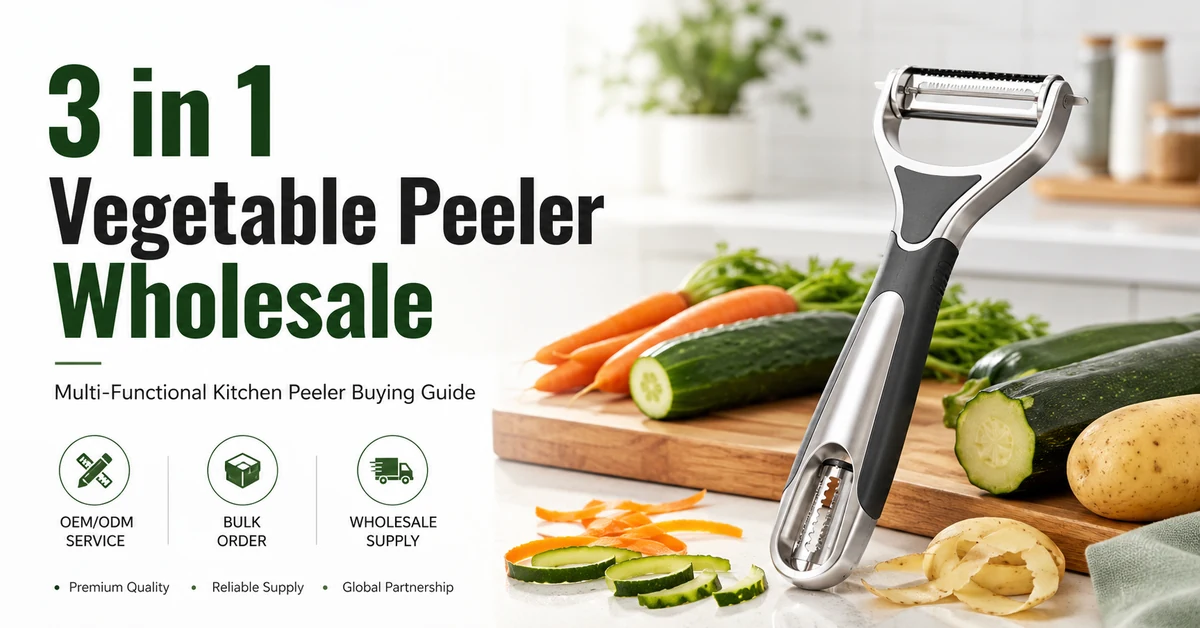
For kitchenware importers, supermarket buyers, online sellers, and private label brands, a 3 in 1 vegetable peeler can be a practical addition to a kitchen tool range. It combines multiple preparation functions in one compact product, giving retailers a clearer selling point than a basic single-function peeler.
This guide explains how to evaluate 3 in 1 vegetable peeler wholesale options without relying only on low price. It covers product functions, material checks, packaging choices, OEM questions, and quality control points that buyers should confirm before placing a bulk order.
Key Takeaways
- A 3 in 1 vegetable peeler is suitable for wholesale, retail display, online sales, and kitchen gadget bundles.
- Buyers should evaluate blade performance, handle comfort, function design, packaging strength, and supplier communication.
- OEM options may include logo, color, packaging, barcode labels, and instruction cards, depending on the supplier.
- Commercial details such as MOQ, lead time, compliance documents, and packing method should be confirmed directly before ordering.
Why 3 in 1 Vegetable Peelers Work for Wholesale Channels
A 3 in 1 peeler is easy for consumers to understand because the value proposition is simple: one small tool can perform several preparation tasks. Depending on the model, it may support standard peeling, julienne cutting, slicing, scraping, trimming, or similar vegetable preparation functions.
For wholesalers and distributors, this format has several advantages. The product is compact, easy to display, suitable for mixed kitchenware assortments, and often appropriate for impulse-buy retail categories. Online sellers can also explain the product clearly through images, short videos, and comparison content.
Common sales channels include supermarket kitchenware sections, household goods stores, marketplace listings, promotional bundles, and private label kitchen tool collections. However, buyers should remember that “3 in 1” is only valuable if each function performs reliably. A product with many weak functions can generate more complaints than a simpler, better-made peeler.
Main Functions Buyers Should Compare
Different suppliers may describe 3 in 1 peelers in different ways, so buyers should request clear photos, samples, or videos showing each function. The most common function combinations include:
- Standard peeling for potatoes, carrots, cucumbers, apples, and similar produce.
- Julienne cutting for vegetable strips used in salads or garnishes.
- Slicing, scraping, or trimming features for softer fruit and vegetables.
- A small remover or trimming point for potato eyes or blemishes.
- An integrated handle design intended to provide stable daily use.
When comparing samples, check whether the peeler works smoothly on both firm and softer vegetables. The blade should cut cleanly without requiring excessive pressure. The handle should not twist, feel slippery, or create discomfort during repeated use.
Comparison Checklist for Wholesale Evaluation
The table below can help buyers compare different 3 in 1 vegetable peeler supplier options during sample review or quotation discussions.
| Evaluation Area | What to Check | Questions to Ask the Supplier |
|---|---|---|
| Blade performance | Sharpness, smooth peeling, alignment, edge consistency | What blade material is used, and can samples be tested before bulk order? |
| Handle and body | Grip comfort, strength, surface finish, safe handling | What handle materials are available, and can colors be customized? |
| Function design | Ease of switching or using each function, cleaning convenience | Can the supplier provide product videos or usage instructions? |
| Packaging | Retail display, product protection, barcode space, shipping durability | Which packaging formats are available for wholesale or retail channels? |
| OEM support | Logo, color, label, packaging design, instruction card | What is the MOQ and lead time for each customization option? |
| Quality control | Inspection process, defect handling, carton condition | What checks are performed before shipment, and can inspection photos be provided? |
Material and Safety Points to Review
Blade quality is one of the most important factors for any peeler. Many vegetable peelers use stainless steel blades, but buyers should not assume a specific grade unless it is clearly confirmed by the supplier. Ask for the material description, sample performance, and any documents required for your target market.
Handle materials may vary by product design and cost level. Common options in the wider kitchen tool market include plastic or soft-grip components, but the exact material should be verified for the selected model. Buyers should check whether the handle feels stable when wet, whether there are rough edges, and whether the construction can withstand normal household use.
For food preparation products, importers should also ask what food-contact requirements apply in the destination market. Do not rely on general statements. Request relevant documentation where needed and confirm whether testing, labeling, or packaging warnings are required for your sales region.
Packaging Options for Retail and Online Sales
Packaging affects both shelf appeal and logistics. A small item like a peeler can be sold in several packaging formats, depending on the channel and budget. Common options may include hanging cards, blister cards, color boxes, bulk packs, or bundle packaging with other kitchen tools.
Supermarket buyers often prefer packaging that makes the function visible and allows the product to hang neatly on display. Online sellers may care more about barcode placement, product protection, and an instruction card that reduces customer confusion. Distributors may choose bulk packaging when selling to smaller retailers that repack or display the item differently.
Before confirming packaging, ask for dielines, sample photos, carton packing details, and whether the package can support your required label, barcode, language, and brand information.
OEM and Private Label Questions to Ask
Private label sourcing is common for kitchen gadgets, but customization should be planned carefully. Not every order needs a custom mold. Many buyers begin with practical OEM changes such as logo placement, handle color, packaging artwork, barcode labels, or instruction inserts.
Before requesting a quotation, prepare the following details:
- Target sales channel, such as Amazon, supermarket, distributor, or promotional gift.
- Preferred packaging type and language requirements.
- Expected order quantity or trial order quantity.
- Logo file, color reference, and any brand guidelines.
- Destination market and any compliance or labeling requirements.
Ask the supplier to separate the cost and MOQ for each customization option. This helps you decide whether to start with standard stock packaging, semi-custom packaging, or a fuller private label package.
Quality Control Before Bulk Shipment
Because a 3 in 1 peeler has multiple working areas, inspection should be more detailed than for a basic peeler. Buyers should request samples from the same or comparable production version before confirming a large order.
Important QC points include blade sharpness, blade alignment, handle strength, surface finish, safe edges, function usability, packaging accuracy, barcode placement, and export carton strength. If the product includes printed artwork, check spelling, color consistency, and logo position before mass production.
For larger orders, buyers may consider pre-shipment inspection or ask the supplier for inspection photos and packing details. The goal is not only to reduce defects, but also to prevent avoidable issues such as wrong packaging, missing labels, weak cartons, or inconsistent product colors.
How to Choose a Reliable Supplier
A good 3 in 1 vegetable peeler supplier should communicate clearly, provide realistic answers, and help buyers match the product to the sales channel. Instead of asking only for the lowest unit price, compare total sourcing value: sample quality, packaging support, customization experience, documentation readiness, delivery communication, and problem-solving attitude.
Useful supplier questions include: What models are available? Can samples be provided? What are the MOQ options for standard and customized orders? What packaging choices are available? What quality checks are performed? What documents can be supplied for the target market? What is the estimated production and shipping timeline after artwork approval?
Clear answers to these questions make it easier to build a repeatable wholesale program and avoid rushed purchasing decisions.
FAQ
What is a 3 in 1 vegetable peeler?
It is a kitchen peeler designed to combine several preparation functions in one tool, such as peeling, julienne cutting, slicing, scraping, or trimming. The exact functions depend on the model.
Is a 3 in 1 peeler suitable for private label sales?
Yes, it can be suitable for private label programs if the supplier supports branding options such as logo, color, packaging artwork, barcode labels, or instruction cards. MOQ and lead time should be confirmed.
What should buyers test before ordering in bulk?
Buyers should test blade sharpness, comfort, function usability, cleaning convenience, packaging quality, and product consistency. Samples are important before committing to bulk purchase.
Which packaging is best for wholesale vegetable peelers?
It depends on the sales channel. Hanging cards and blister cards suit retail display, color boxes suit online sales, and bulk packaging may suit distributors or promotional orders.
Should buyers ask for compliance documents?
Yes. Requirements vary by destination market, so buyers should ask the supplier what food-contact, labeling, or import documents can be provided for the selected product.
