




Why Electric Sharpeners Might Be Damaging Your Kitchen Knives
Electric knife sharpeners are popular because they are fast, simple, and widely available. For a busy home cook, pulling a dull blade through a machine can seem easier than learning how to use a whetstone. The problem is that speed and convenience do not always mean better care for your kitchen knives.
A sharp knife should cut cleanly with minimal pressure. When a blade becomes dull, it needs either honing, sharpening, or in some cases professional repair. Electric sharpeners can restore a working edge, but they often do so aggressively. Over time, that can shorten blade life, change the cutting profile, and leave an edge that feels sharp at first but dulls quickly.

Key Takeaways
- Electric sharpeners can remove more metal than necessary, especially when used frequently.
- High-speed abrasive wheels or belts may create heat and uneven bevels.
- Honing and sharpening are different maintenance steps; not every dull-feeling knife needs grinding.
- Manual sharpening methods offer more control for quality kitchen knives.
- Good cutting boards, storage, and hand washing help preserve the edge between sharpening sessions.
How Electric Knife Sharpeners Work
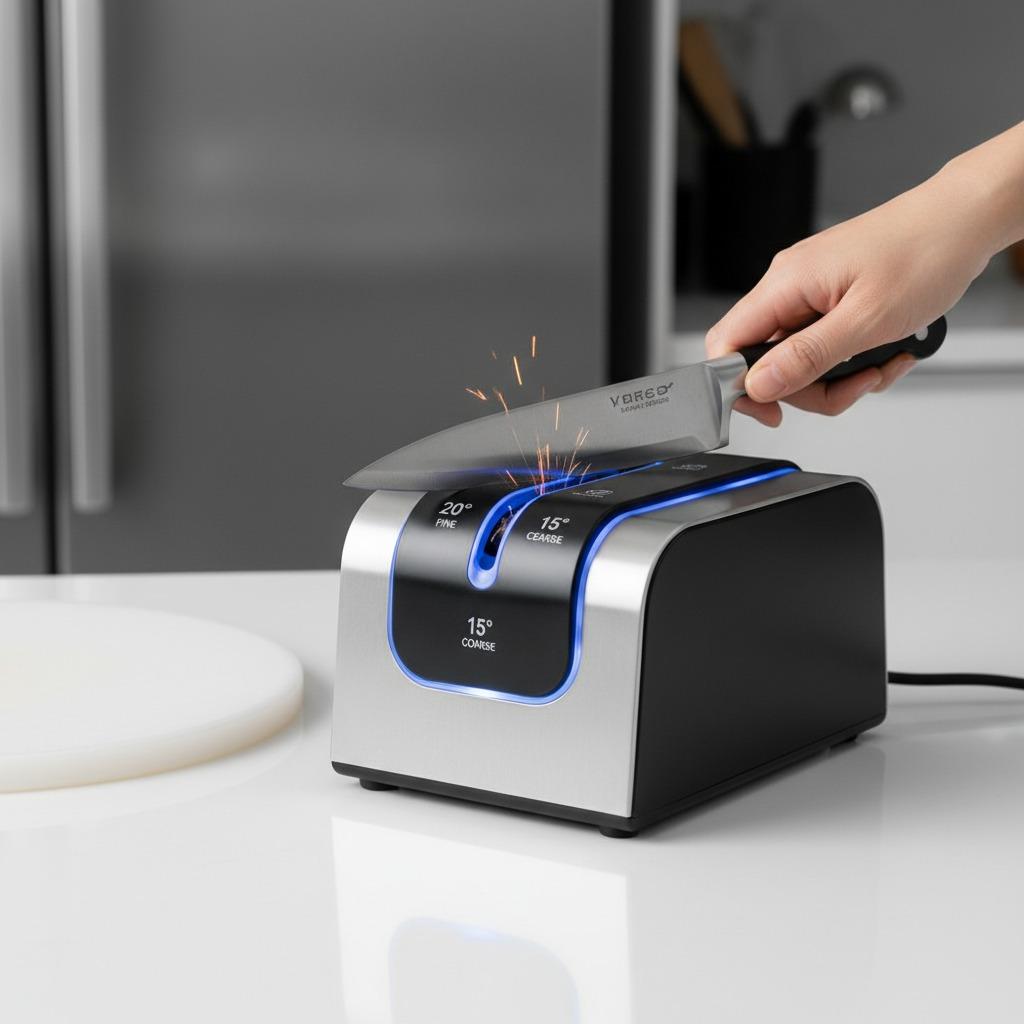
Most electric sharpeners use motor-driven abrasive wheels, belts, or discs. The user pulls the knife through one or more slots while the abrasive removes steel from the edge. Some models have several stages: a coarse stage for shaping, a finer stage for refining, and sometimes a polishing stage.
This design is convenient because the angle is partially guided by the slot. However, the user often cannot see exactly how much metal is being removed. If the blade is pulled through too slowly, pressed down too hard, or sharpened too often, the edge can be overworked. Knives with thinner edges, delicate tips, or special bevel geometry may be especially vulnerable to rough handling.
Why Electric Sharpeners Can Harm Kitchen Knives
The biggest risk is excessive metal removal. Sharpening is the process of grinding away steel to create a new edge. That is useful when a knife is truly dull, but unnecessary grinding makes the blade narrower and can change the original profile. A chef’s knife, for example, may lose some of its smooth rocking action if the heel or belly is ground unevenly over time.
Heat is another concern. Fast-moving abrasives create friction. If too much heat builds up near the edge, it may affect the hardness and durability of the steel at the very thin cutting surface. The user may not notice this happening because the damaged area is small, but the result can be an edge that chips, rolls, or dulls sooner than expected.
Electric sharpeners can also leave scratches, coarse tooth patterns, or inconsistent bevels. A coarse edge may feel aggressive on paper or tomatoes, but it may not provide the refined, controlled cutting performance many cooks expect from a well-maintained kitchen knife.
Electric Sharpeners vs Manual Sharpening
The best sharpening method depends on the knife, the user’s skill level, and the condition of the edge. The comparison below can help you decide when an electric sharpener is a reasonable shortcut and when a gentler method is safer.
| Maintenance Option | Best Use | Main Advantage | Main Risk or Limitation |
|---|---|---|---|
| Electric sharpener | Basic utility knives or very dull inexpensive blades | Fast and easy to use | Can remove too much metal and reduce control |
| Whetstone | Regular sharpening for quality kitchen knives | Precise control over angle and pressure | Requires practice and time |
| Honing rod | Routine edge realignment between sharpening | Low metal removal when used correctly | Does not repair a truly dull or damaged edge |
| Guided manual system | Users who want angle help without a motor | More consistent than freehand sharpening | May not suit every blade shape |
| Professional sharpening | Damaged, expensive, or unfamiliar knives | Experienced assessment and repair | Quality varies by service provider |
Honing Is Not the Same as Sharpening
Many people sharpen too often because they mistake a misaligned edge for a dull one. During normal cutting, the thin edge of a knife can bend slightly out of alignment. A honing rod helps straighten that edge so it cuts better again. Honing does not replace sharpening, but it can delay the need for grinding.
If your knife still has a usable edge but feels slightly less responsive, try honing first. Use light pressure, keep a steady angle, and make smooth strokes. If the blade still slips on food after honing, then it may need sharpening.
Safer Ways to Maintain Your Knives
For most home kitchens, a simple care routine is better than frequent machine sharpening. You do not need advanced equipment to protect your knives; you need consistency and restraint.
- Use the right cutting surface. Wood and soft plastic boards are generally kinder to edges than glass, stone, or ceramic surfaces.
- Hand wash and dry promptly. Dishwashers can expose knives to impact, moisture, and harsh cleaning conditions.
- Store blades separately. Use a block, sheath, drawer insert, or magnetic rack so edges do not knock against other tools.
- Hone regularly. A few careful strokes can restore cutting feel without heavy steel removal.
- Sharpen only when needed. If the knife no longer responds to honing, use a whetstone, guided system, or qualified sharpening service.
When an Electric Sharpener May Still Be Useful
Electric sharpeners are not automatically wrong for every situation. They may be acceptable for low-cost utility knives, heavily worn blades where perfect geometry is not important, or users who cannot manage manual sharpening. The key is to use them sparingly and follow the device instructions carefully.
Before using one, ask practical questions: Does the sharpener match the knife’s edge angle? Is the abrasive stage too coarse for routine touch-ups? Can it handle the blade thickness and shape? Are you sharpening because the knife is truly dull, or would honing be enough? These questions matter more than the promise of quick results.
How to Choose a Better Sharpening Routine
If you own everyday kitchen knives and want a balanced approach, start with a honing rod and a medium-grit whetstone or a guided manual sharpener. Learn on a less expensive knife first. Focus on light pressure, consistent angle, and removing only enough steel to form a clean edge.
For valuable knives, damaged tips, chips, or unfamiliar blade styles, consider a professional sharpener. Ask how they control heat, what equipment they use, whether they can match the existing bevel, and how much metal they expect to remove. A careful service provider should be able to explain the process clearly without making vague promises.
FAQ
Do electric sharpeners always ruin knives?
No. They can be useful in limited cases, but frequent or careless use may shorten blade life and create uneven edges. They are usually less controlled than manual methods.
How often should I sharpen my kitchen knives?
Sharpen only when honing no longer restores cutting performance. Frequency depends on how often you cook, what you cut, the cutting board used, and how the knife is stored.
Is a whetstone better than an electric sharpener?
A whetstone usually offers better control and removes less metal when used correctly. It does require practice, so beginners should start slowly and maintain a consistent angle.
Can honing replace sharpening?
No. Honing realigns the edge; sharpening creates a new edge by removing metal. Honing can extend the time between sharpening sessions.
What should I do if my knife has chips or a broken tip?
A damaged blade may need repair beyond normal sharpening. Consider asking a qualified sharpening service how they would restore the profile and how much material must be removed.
Final Thoughts
Electric sharpeners solve one problem quickly, but they can create others if used as the default maintenance method. For better long-term results, hone regularly, sharpen only when necessary, and choose a method that gives you control over pressure, angle, and metal removal. With careful use and storage, your kitchen knives can stay safer, sharper, and more reliable for everyday cooking.
