




Your Ultimate Stainless Steel Grater Guide
For retailers, distributors and kitchenware brands, a stainless steel grater is a small product with a large influence on customer satisfaction. It is used for everyday tasks such as zesting citrus, grating hard cheese, shredding vegetables and adding fine texture to prepared dishes. Because it often comes into contact with acidic foods, moisture and repeated hand pressure, buyers need to look beyond appearance and evaluate usability, consistency and supplier communication.
The original article highlights several useful points: stainless steel kitchen tools are valued for functionality, durability and design; grater development should consider blade pattern, sharpness, handle ergonomics, flat-body stability and easy storage. This rewritten guide expands those ideas into practical B2B sourcing guidance without assuming unverified specifications. Use it as a checklist when comparing a stainless steel grater factory, kitchen gadgets supplier or OEM partner.
Key Takeaways
- Assess the grater as a working tool, not only as a display item: sharpness, control, comfort and cleaning matter.
- Ask suppliers to confirm the stainless steel type, surface finish, handle material, packaging method and available customization options.
- Request samples and test them with common foods such as citrus peel, hard cheese and firm vegetables.
- Compare suppliers on documentation, communication speed, quality control process and ability to keep production consistent.
- Avoid making claims about rust resistance, food contact compliance or durability unless the supplier provides evidence.
Why Stainless Steel Graters Remain a Core Kitchen Tool
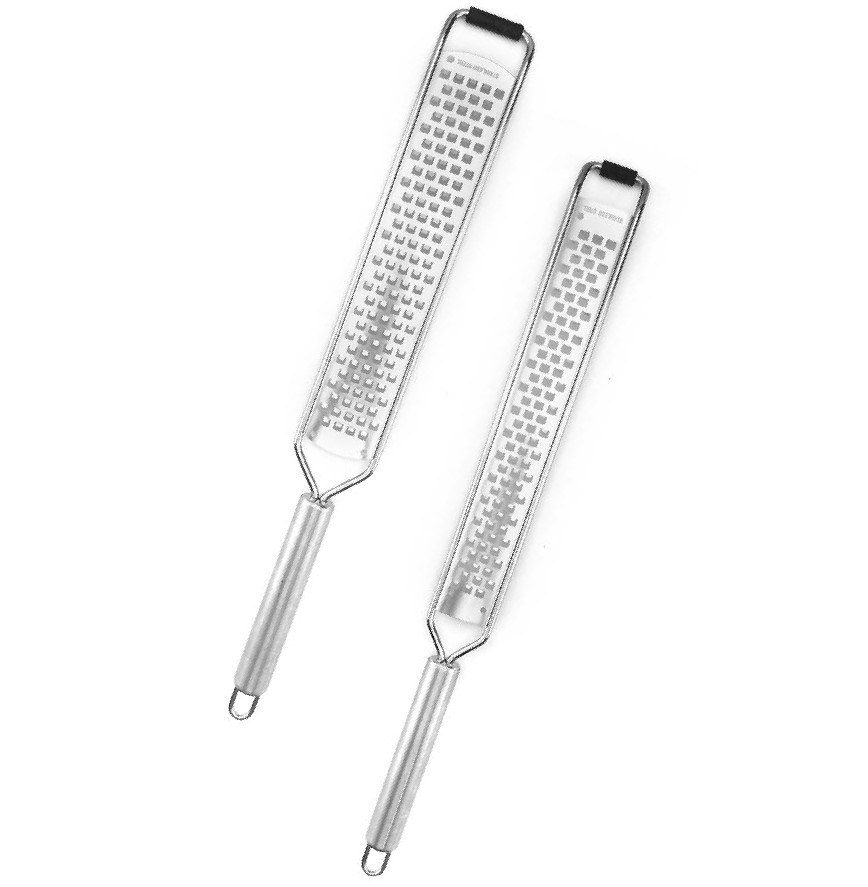
A grater may look simple, but its performance depends on several design decisions. The blade openings must cut cleanly without tearing food into uneven pieces. The body should feel stable during repeated strokes. The handle should support a secure grip, especially when hands are wet or oily. A hanging loop, when included, can make storage easier for both home kitchens and commercial prep areas.
Stainless steel is widely used for kitchen tools because it offers a clean appearance and can be formed into sharp cutting surfaces. However, buyers should not treat all stainless steel products as identical. Ask the supplier which material grade is used, whether the part is stamped or formed, how edges are finished and what cleaning guidance should be printed on the packaging or instruction insert.
Design Features Buyers Should Review
Before placing a wholesale or OEM order, inspect the grater from the user’s point of view. A flat-body design can offer stability and control, especially for tasks performed over a plate, bowl or cutting board. A comfortable grip handle can reduce hand fatigue during repeated use. The original article also mentions a sleek profile and convenient hanging loop; these are useful features when they fit the target market and retail positioning.
Blade pattern is one of the most important selection points. Fine holes suit citrus zest, nutmeg, ginger and hard cheese. Medium holes work well for cheese, chocolate and some vegetables. Coarser holes are better for shredding. If a product page or catalog uses broad wording such as “multi-purpose,” ask the supplier to show sample results for the foods your customers are most likely to prepare.
Comparison Checklist for Sourcing a Grater
| Evaluation Area | What to Check | Questions to Ask the Supplier |
|---|---|---|
| Material | Stainless steel body and any handle components | What stainless steel grade is used, and can it be documented? |
| Blade performance | Cutting sharpness, hole pattern and food texture | Can samples be tested with citrus, cheese and vegetables? |
| Ergonomics | Grip shape, control and comfort during repeated use | Are alternative handle designs or finishes available? |
| Safety and finish | Burrs, rough edges and stability during use | What inspection steps are used before packing? |
| Packaging | Retail display, protection in transit and instruction space | Can packaging be adapted for private label or barcode needs? |
| Commercial terms | Lead time, order quantity, samples and customization | What are the current MOQ, sample cost and production schedule? |
How to Evaluate a Stainless Steel Grater Factory
When the search intent is “stainless steel grater factory,” buyers usually want more than a finished product photo. They need to know whether the supplier can deliver consistent quality over repeat orders. Start by asking for clear product drawings or specification sheets. These should identify the overall size, material description, handle construction, surface treatment, packaging and any available branding positions.
Next, review communication quality. A reliable kitchen gadgets supplier should answer technical and commercial questions directly. If a supplier cannot confirm basic details such as material, packaging dimensions or sample availability, it may be difficult to manage a private label program with them. For OEM work, ask what parts of the design can be customized and which changes would require new tooling or a longer lead time.
Do not assume certifications, testing results or compliance status. Instead, request the documents required for your market and distribution channel. Food-contact rules, labeling expectations and retailer documentation can vary by country. A responsible sourcing process records what has been provided, what is still pending and who is responsible for verification.
Sample Testing Before Wholesale Orders
Samples help reveal issues that catalog photos cannot show. Test the grater with realistic tasks: zest a lemon, grate a hard cheese, shred a carrot and rinse the tool after use. Observe whether food clogs the blade area, whether the handle remains comfortable and whether the body flexes under pressure. Also check whether sharp edges are exposed in a way that could create a poor user experience during washing or storage.
- Inspect the sample visually for scratches, burrs, uneven finishing or loose handle parts.
- Use the same foods across samples from different suppliers so comparisons are fair.
- Wash and dry the sample according to the supplier’s recommended care method.
- Record comments from multiple testers, not only from the purchasing team.
- Keep an approved sample as the reference for future production checks.
Packaging, Branding and Retail Readiness
Packaging should protect the grater, explain its intended use and support the sales channel. For e-commerce, the product may need stronger protection against bending or scratching during parcel shipping. For retail shelves, the package must communicate the grating style, care instructions and brand information clearly. If the grater includes a hanging loop, packaging should not block the customer from understanding how the item can be stored.
For private label projects, ask whether the supplier can support logo placement, color options for handles, printed inserts, labels or cartons. Also confirm who provides artwork files, barcode information and translation text. These details are not glamorous, but they prevent delays and reduce the risk of repacking costs after production.
Use and Care Points to Communicate to Customers
Even when a product is sourced for wholesale, final customer guidance matters. Clear care instructions can reduce complaints and returns. Customers should be told how to clean the blade area safely, how to dry the tool after washing and where to store it to protect the cutting surface. If the supplier recommends hand washing or states dishwasher suitability, include only the confirmed guidance in the final packaging copy.
Good product content should avoid exaggerated promises. Instead of broad claims such as “lasts forever,” describe practical benefits that are supported by the design: a stable flat body, a comfortable handle, a convenient hanging loop or a blade pattern suited to specific foods, if those features are present in the selected model.
FAQ
What should I ask a stainless steel grater factory first?
Start with material grade, blade pattern, dimensions, handle material, packaging options, sample availability, MOQ, lead time and quality inspection process. Ask for written specifications rather than relying only on photos.
Is every stainless steel grater rust-free?
No. Rust performance depends on material, finishing, care conditions and usage environment. Ask the supplier for the stainless steel grade and any available test or compliance documentation before making claims.
How do I compare OEM grater samples?
Use the same foods and the same test method for each sample. Compare cutting performance, clogging, hand comfort, stability, cleaning ease, edge finishing and packaging quality.
Can a grater be customized for private label programs?
Often, but the available options depend on the supplier. Ask about logo placement, handle colors, packaging, carton marks and whether any change requires new tooling.
What makes a grater suitable for retail or wholesale sourcing?
A suitable product combines consistent material, safe finishing, usable blade design, protective packaging, clear care instructions and dependable supplier communication.
Final Sourcing Advice
A stainless steel grater is a practical kitchen tool, but sourcing it well requires attention to detail. Focus on verified specifications, sample testing and clear supplier questions. When comparing factories or kitchen gadgets suppliers, the best choice is not simply the lowest quote; it is the partner that can explain the product, document the details and repeat the approved quality across future orders.
