





How to Choose a China Scissors Factory
Choosing a China scissors factory involves more than comparing the lowest unit price. A reliable supplier should be able to explain the blade material, edge treatment, pivot construction, handle process, testing method, packaging options and production schedule. These factors determine whether a pair of scissors cuts cleanly when new and continues to perform after repeated use.
This guide gives importers, distributors and private-label brands a practical framework for evaluating a scissors manufacturer. It focuses on the questions that should be answered before approving a sample or placing a production order.
Key Takeaways
- Define the cutting application before selecting steel, blade geometry or handle construction.
- Request written material specifications instead of accepting general claims such as high-quality stainless steel.
- Evaluate blade alignment, pivot movement, cutting performance, handle strength and corrosion resistance.
- Approve a production-standard sample with the correct logo, color and packaging.
- Compare quotations on the same specification so that price differences are meaningful.
1. Start With the Intended Cutting Application
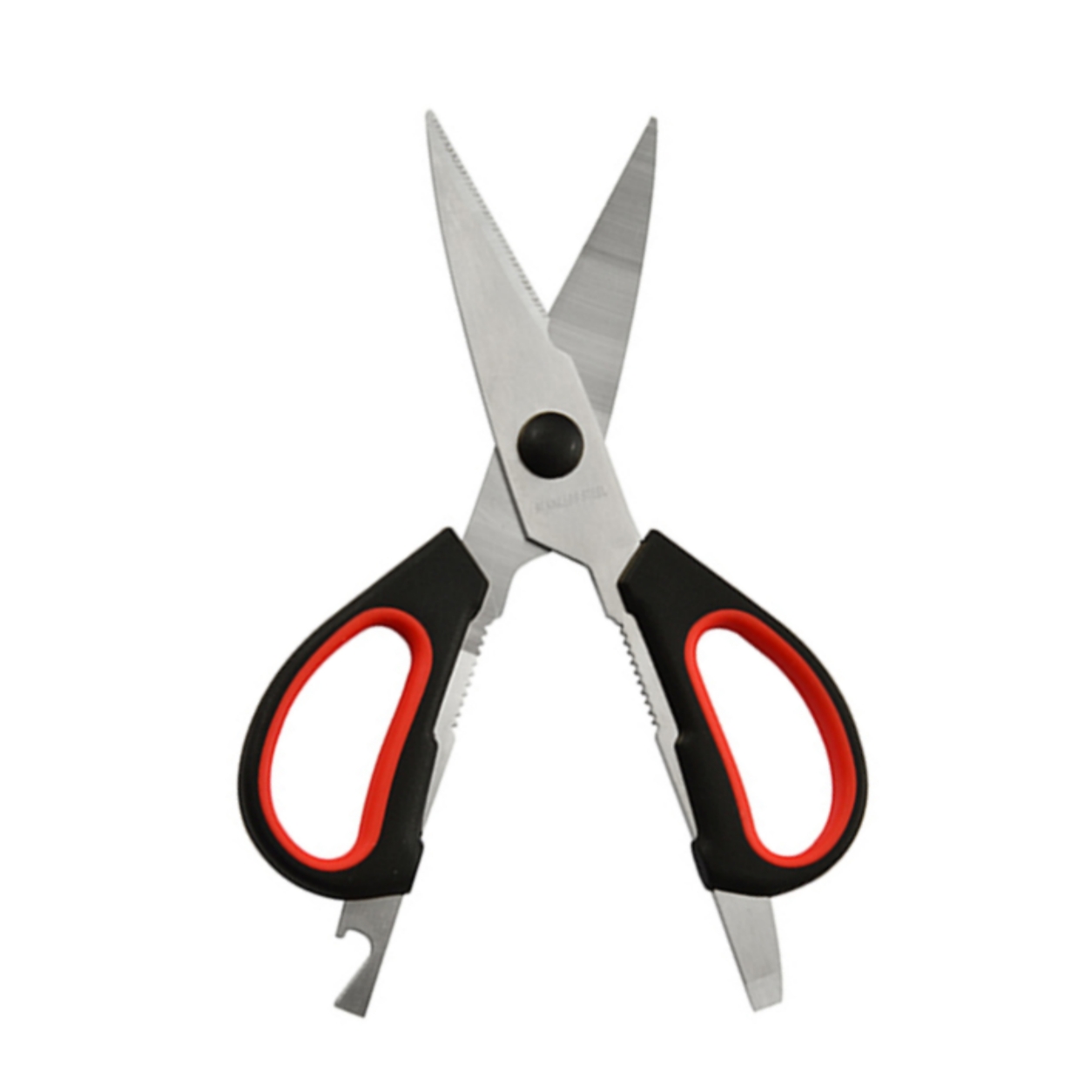
The first step is to define what the scissors must cut. Kitchen scissors used for herbs, food packaging and light preparation have different requirements from poultry shears, household scissors, school scissors or tailor scissors. The expected user, cutting material and frequency of use influence the blade thickness, edge profile, handle size and pivot design.
A useful request for quotation should identify the product type, target market, expected retail position, required dimensions, preferred materials, logo method, packaging and estimated order quantity. Sending only a reference photo often produces quotations that look comparable but are based on different materials and construction.
2. Compare Blade Materials and Specifications
Stainless steel is widely used for scissors because it balances corrosion resistance, manufacturability and cost. However, stainless steel is a family of materials, not a single grade. Common scissors materials may include 420-series stainless steel, 3Cr13 and other grades selected according to the product's performance and price target.
| Specification | Why It Matters | What to Request |
|---|---|---|
| Steel grade | Affects corrosion resistance, hardness and cost | Written material grade or material report |
| Blade hardness | Influences edge retention and brittleness | Target hardness range and test method |
| Blade thickness | Affects stiffness and cutting stability | Drawing tolerance or approved sample |
| Surface finish | Affects appearance and corrosion behavior | Finish sample and corrosion test requirement |
| Edge geometry | Determines cutting feel and suitable materials | Cutting application and performance standard |
Buyers should avoid judging quality from steel grade alone. Heat treatment, grinding accuracy, blade alignment and pivot assembly can have as much influence on real cutting performance as the material name.
3. Inspect the Pivot and Blade Alignment
The pivot controls how smoothly the blades open and close. If it is too loose, the blades may separate and fold the material instead of cutting it. If it is too tight, the scissors can feel uncomfortable and may wear unevenly. Rivets, screws and other pivot systems each have different cost, adjustment and maintenance characteristics.
During sample evaluation, open and close the scissors repeatedly and check whether resistance remains consistent. View the blades from the tip and spine to identify twisting or uneven contact. Test the full cutting length, because a sample may perform well near the pivot but fail near the tip.
4. Evaluate Handle Safety and Comfort
Handle design affects grip comfort, control and safety. Plastic choice, wall thickness, finger-hole dimensions and overmold quality should match the intended user. Kitchen and poultry scissors may require a secure grip when hands are wet, while office or school scissors may prioritize weight and comfortable repeated use.
Check for sharp plastic edges, visible gaps, loose inserts, color inconsistency and separation between hard and soft materials. If the design includes bottle openers, nutcrackers, bone notches or other functions, test each feature independently instead of assuming that a multifunction design performs every task well.
5. Define Quality Control Before Ordering
A professional inspection plan converts the word quality into measurable acceptance criteria. Requirements should be agreed before mass production, not after a shipment is completed.
- Visual inspection for scratches, stains, burrs, deformation and color variation.
- Dimension and weight checks against the approved drawing or reference sample.
- Blade alignment and opening-resistance checks.
- Cutting tests using materials relevant to the product's intended application.
- Handle, pivot and accessory function checks.
- Corrosion testing when required by the market or product specification.
- Packaging, barcode, label and carton verification.
The inspection method, sample size and acceptable quality limit should be written into the purchase specification. Brands may also request third-party inspection when launching a new model or working with a supplier for the first time.
6. Clarify OEM and Private-Label Requirements
OEM scissors projects can range from placing a logo on an existing model to developing a new blade, handle and retail package. The more structural changes a project requires, the more important drawings, prototypes and approval records become.
Before requesting a quotation, clarify the logo position and process, Pantone colors, handle material, blade finish, packaging structure, labeling, barcode requirements, compliance documents and destination market. Ask whether tooling is required, who owns the tooling and how replacement or maintenance is handled.
7. Approve a Production-Standard Sample
A generic showroom sample is useful for checking basic construction, but it is not enough for final approval. The approval sample should represent the materials, dimensions, finish, logo, colors and packaging intended for production.
Record the approved sample with photographs, measurements and written comments. Both buyer and supplier should use the same version as the production reference. Any change after approval should be documented so that a later cost-saving substitution does not reduce performance.
8. Compare Quotations Correctly
A low quotation may reflect a different steel grade, thinner blade, simpler handle, lighter packaging or fewer inspection requirements. Ask suppliers to separate major cost elements and confirm which specification each quotation covers.
Important commercial questions include minimum order quantity, sample cost, tooling cost, sample lead time, production lead time, payment terms, packaging quantity, carton dimensions and replacement policy for confirmed defects. Exact figures vary by model and customization level, so they should be confirmed for each project.
9. Questions to Ask a Scissors Manufacturer
- Which steel grade and hardness range are proposed for this model?
- What cutting material is used for the factory performance test?
- How are blade alignment and pivot resistance inspected?
- Which parts of the product can be customized?
- Does the project require new tooling?
- Can the sample use production-standard materials and packaging?
- Which compliance documents are available for the target market?
- What inspection standard will be used before shipment?
- What are the sample and mass-production lead times?
- How are confirmed quality problems handled?
10. Build a More Reliable Supplier Comparison
The best China scissors factory for a project is not automatically the largest supplier or the supplier with the lowest price. It is the manufacturer that can translate the buyer's application into a clear specification, produce a repeatable sample and maintain that standard during mass production.
Compare suppliers using a scorecard covering technical response, sample performance, documentation, communication, customization, quality control, lead time and total landed cost. This makes the sourcing decision easier to defend and reduces the risk of selecting a quotation that is inexpensive only because important requirements were omitted.
Frequently Asked Questions
What information should I send to a China scissors factory?
Send the intended application, dimensions, reference images or drawings, preferred materials, logo method, colors, packaging, target market and estimated quantity. The more complete the specification, the more accurate the quotation.
Should I choose scissors based only on steel grade?
No. Steel grade is important, but heat treatment, grinding, blade alignment, pivot assembly and handle construction also affect performance.
When is new tooling required?
New tooling may be needed when changing the handle structure, blade geometry or other molded and stamped components. Logo printing, laser marking and packaging customization may not require structural tooling.
How should I test a scissors sample?
Test the sample with materials that match the intended use. Check cutting performance along the full blade, opening resistance, alignment, handle comfort, finish and all additional functions.
Next Step
Review Bonet's kitchen scissors range, then prepare your target specification before requesting an OEM quotation. For maintenance guidance, see how to sharpen scissors and our stainless steel vs carbon steel comparison.
